Know your true costs. Get your margins right.
Even as commodities split, move through processing, and get sold, COGS stays up to date.
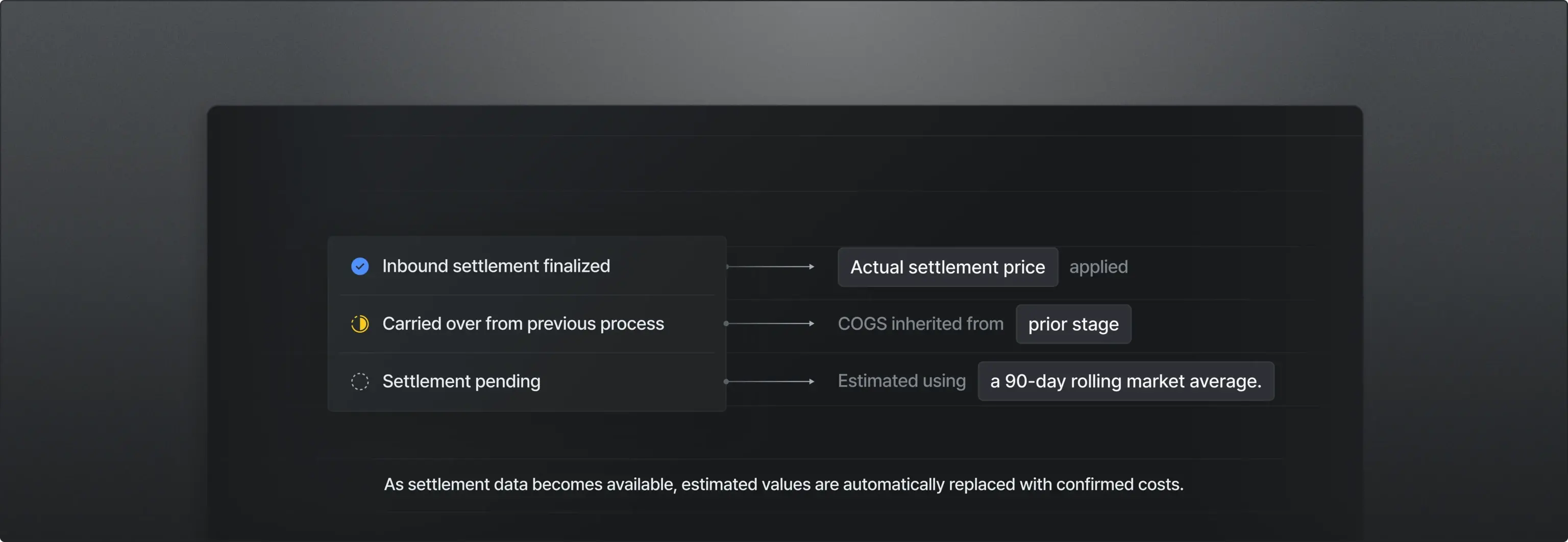
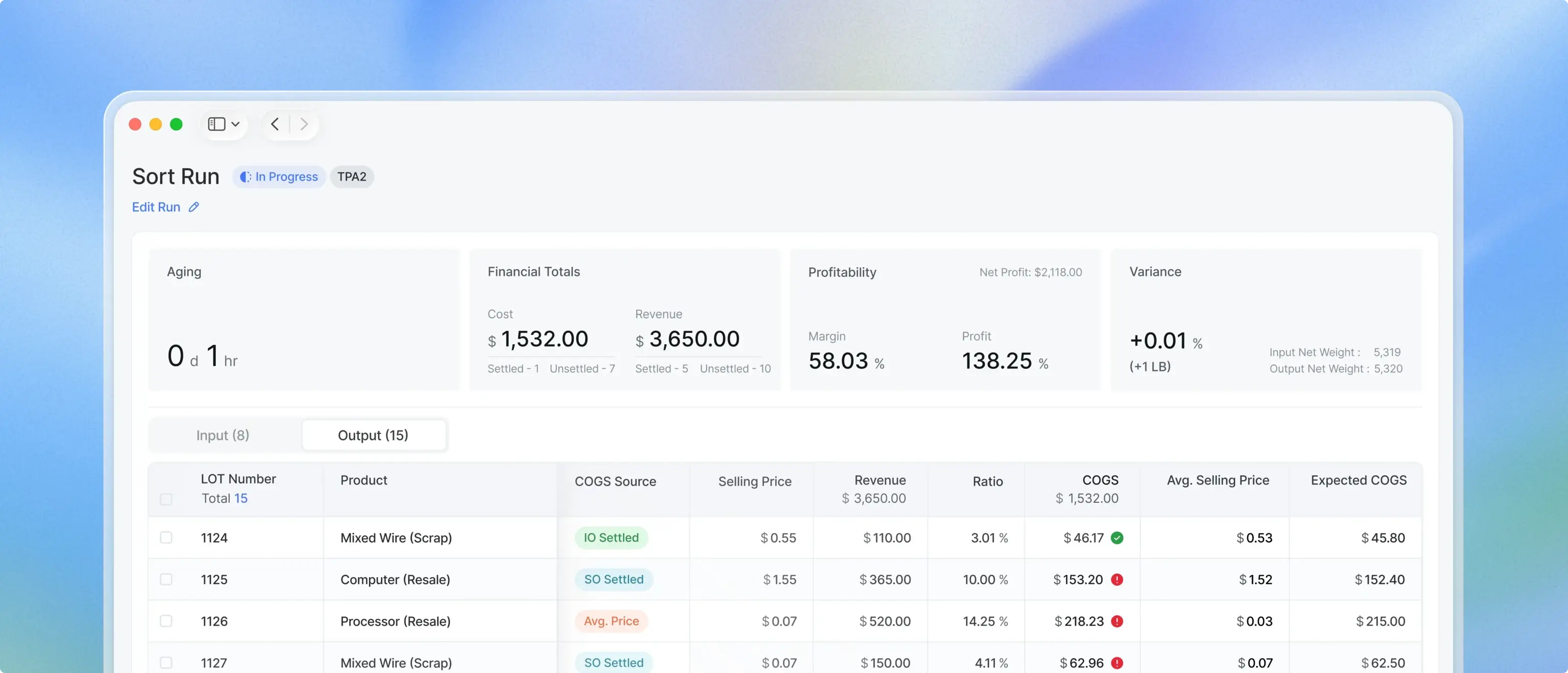
Joodra Works tracks every step of the recycling workflow to automatically calculate COGS. Before settlement, it provides the best available estimate. Once settlement is finalized, COGS updates to the actual value automatically. No missing data. No manual adjustments. No delayed updates.
Why COGS is hard in recycling.
Most recycling operations struggle to calculate accurate COGS — and for good reason. These are the three reasons traditional systems consistently produce incomplete COGS data.
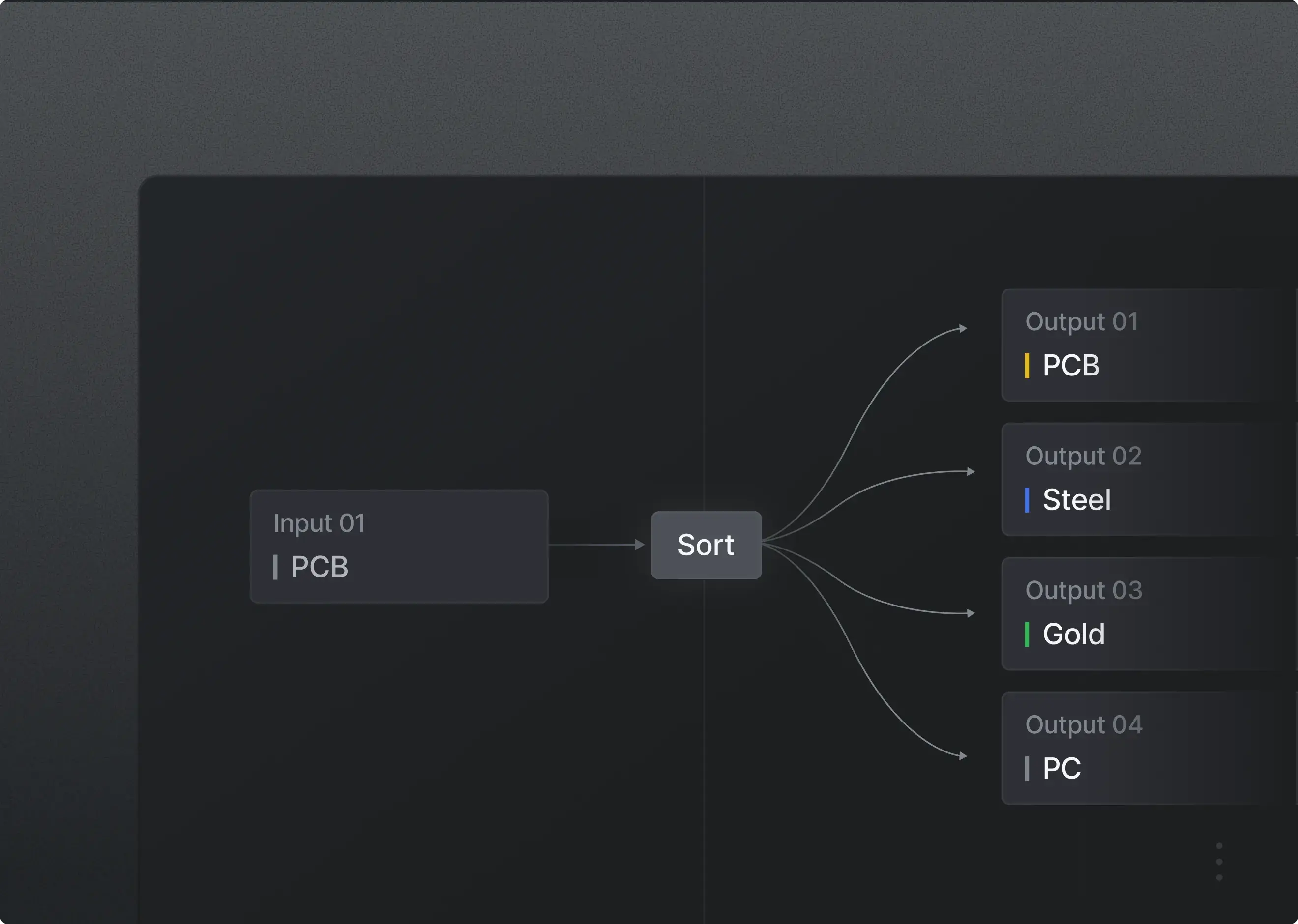
A commodity splits into multiple outputs.
A single inbound commodity often becomes multiple outputs after processing. For example, inbound e-waste entering a Sort process may separate into PCB, steel, and precious metals. If the inbound batch cost $1,000, what is the true cost of one PCB? Most systems can't answer that question.
How Joodra Works solves this.
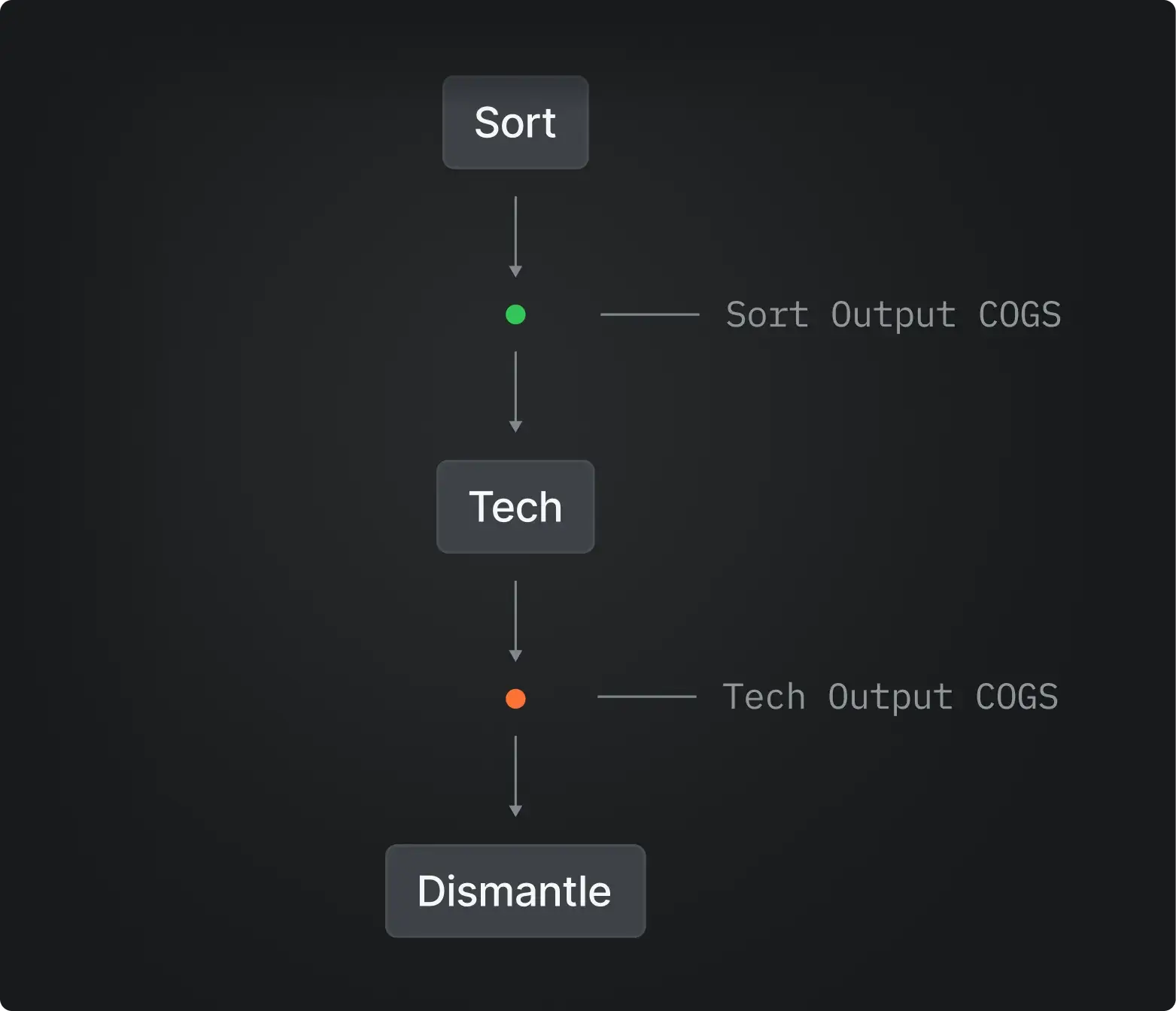
Continuous cost inheritance
Output COGS from each process automatically becomes the cost basis for the next stage. Even across multiple steps—Sort, Tech, Dismantle—cost tracking never breaks.
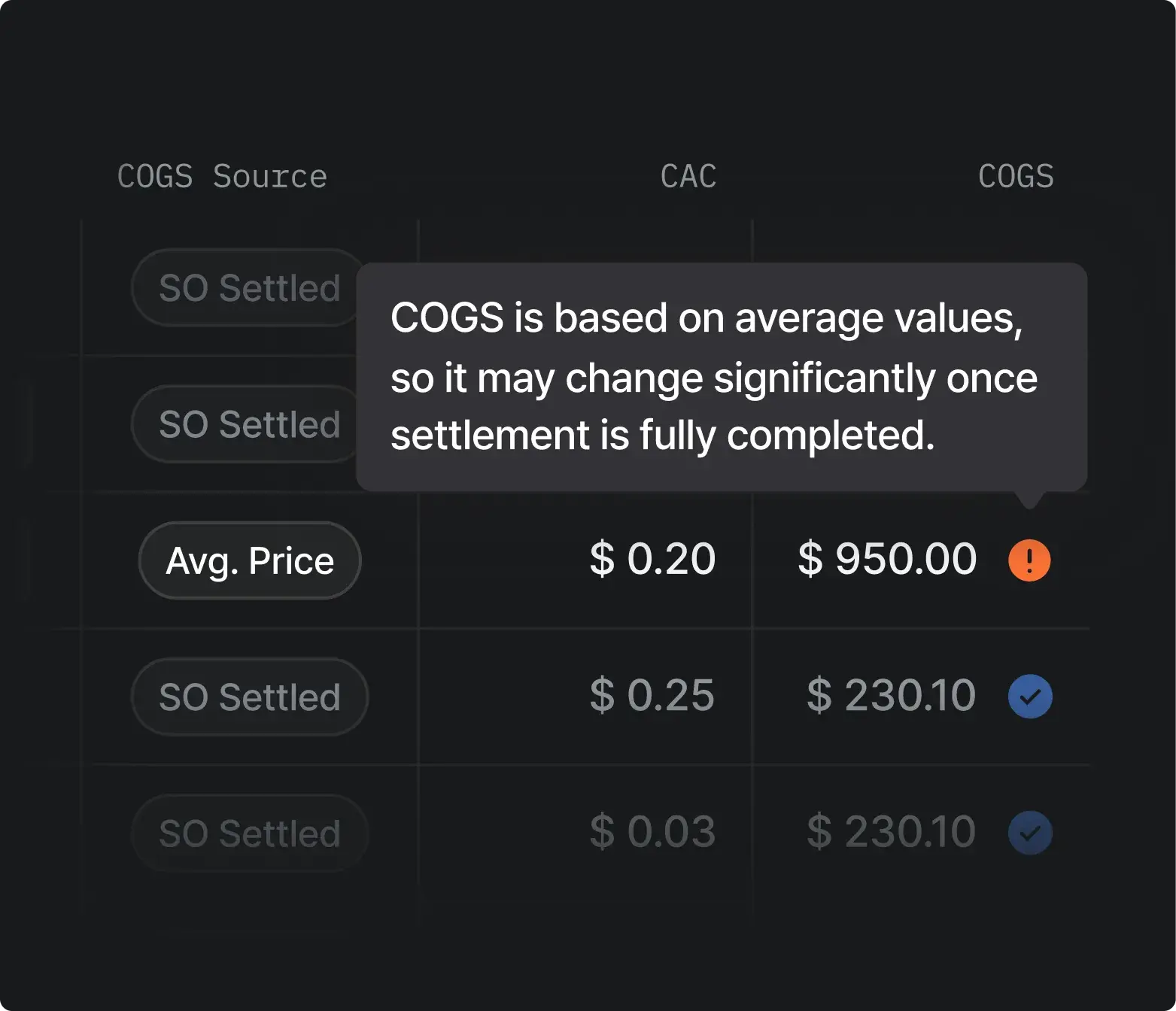
Always-on COGS
When inbound settlement is pending, Joodra Works estimates COGS using a 90-day rolling market average. The system clearly indicates whether each value is estimated or confirmed, so users always know the reliability of the data.
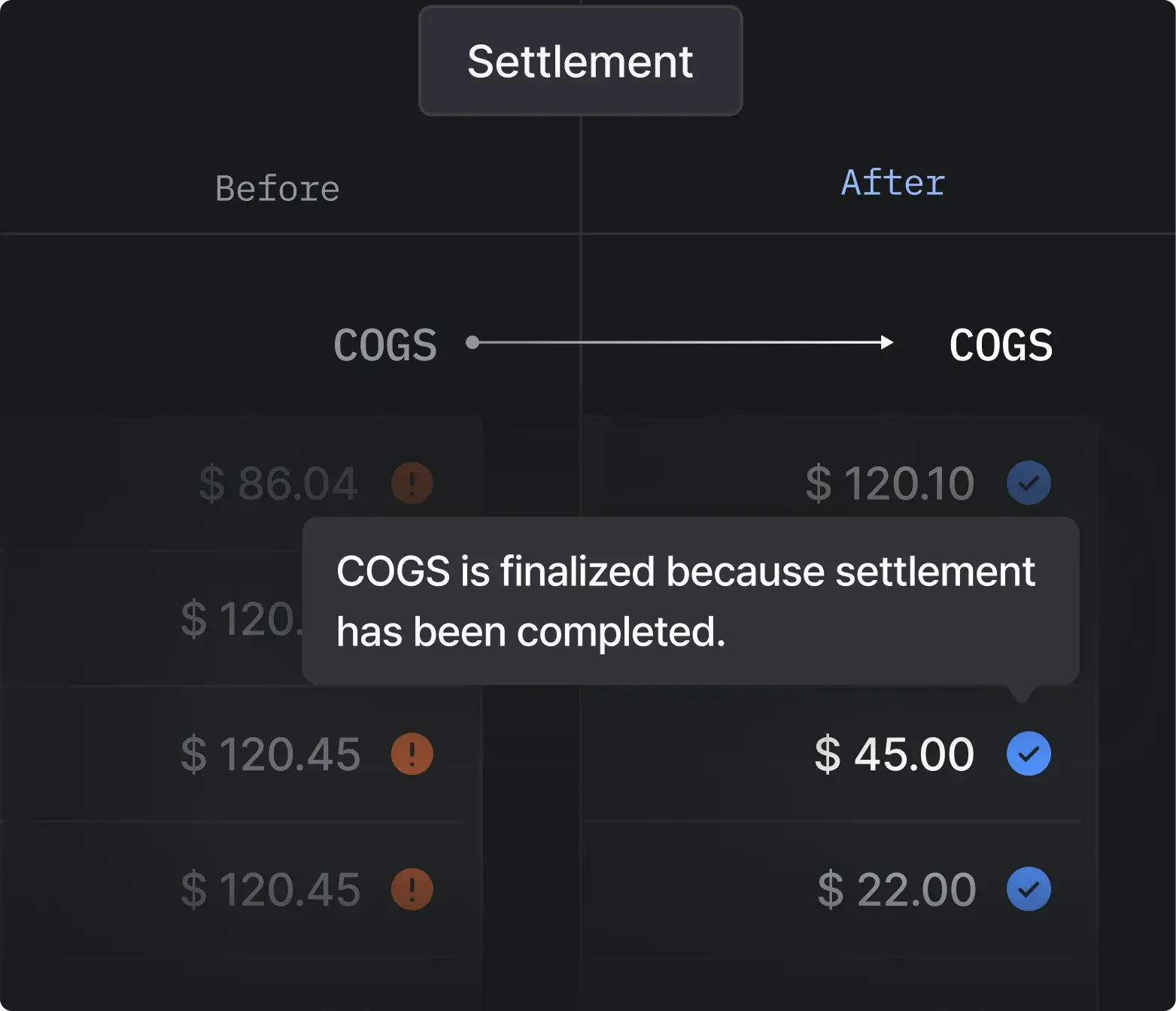
Progressive cost refinement
As inbound settlement or LOT sales are confirmed, all related outputs automatically update from estimated to confirmed COGS. The more transactions you settle, the more precise your remaining inventory costs become.
How COGS is Calculated
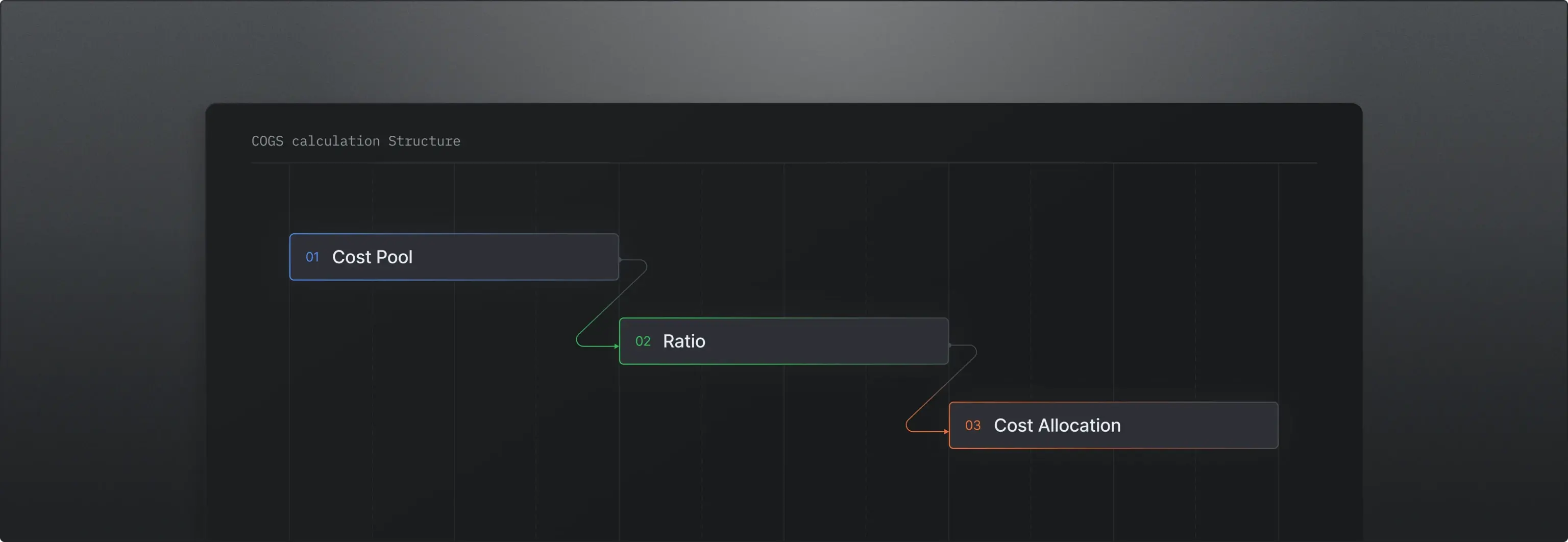
COGS calculation Structure
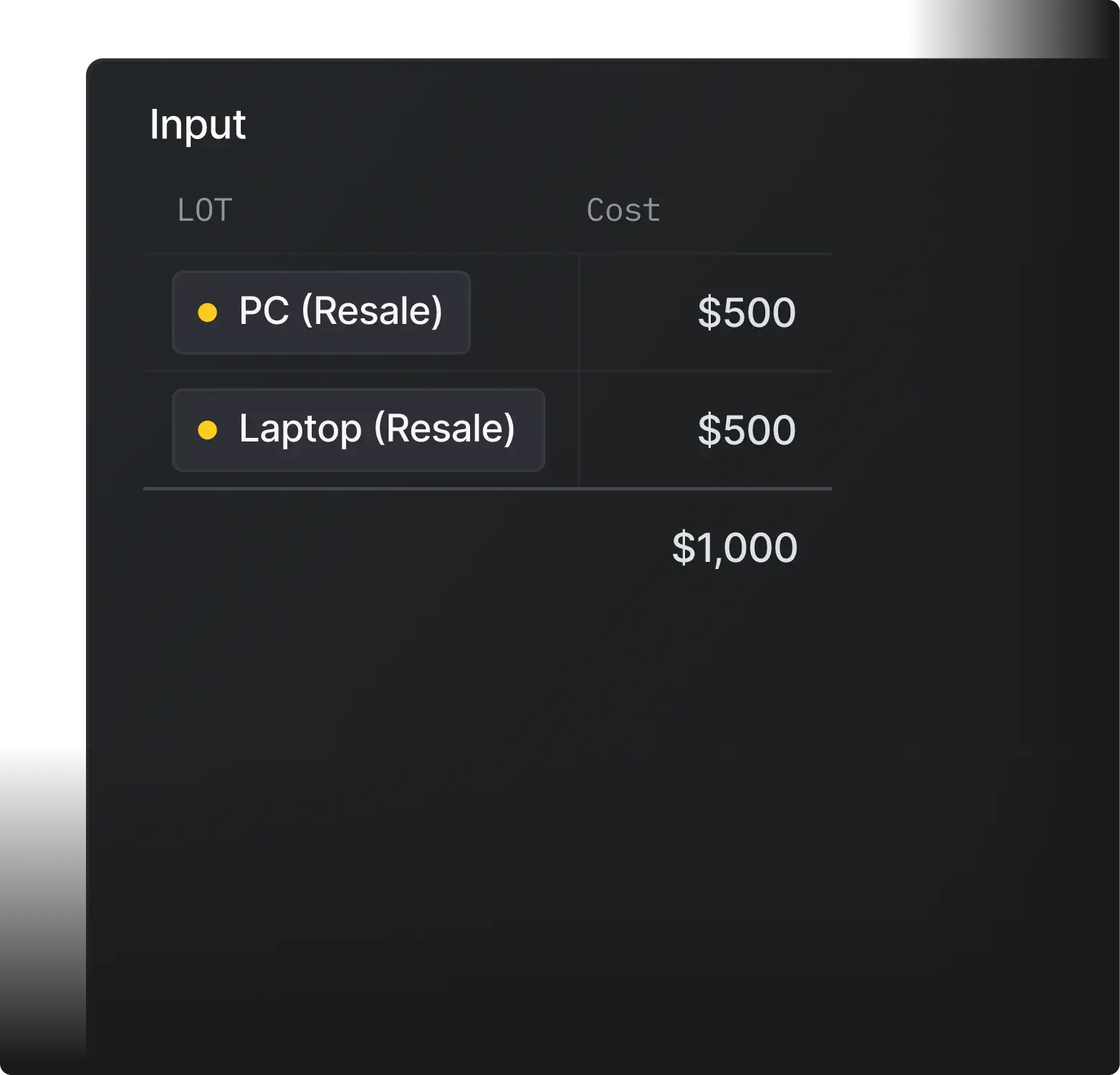
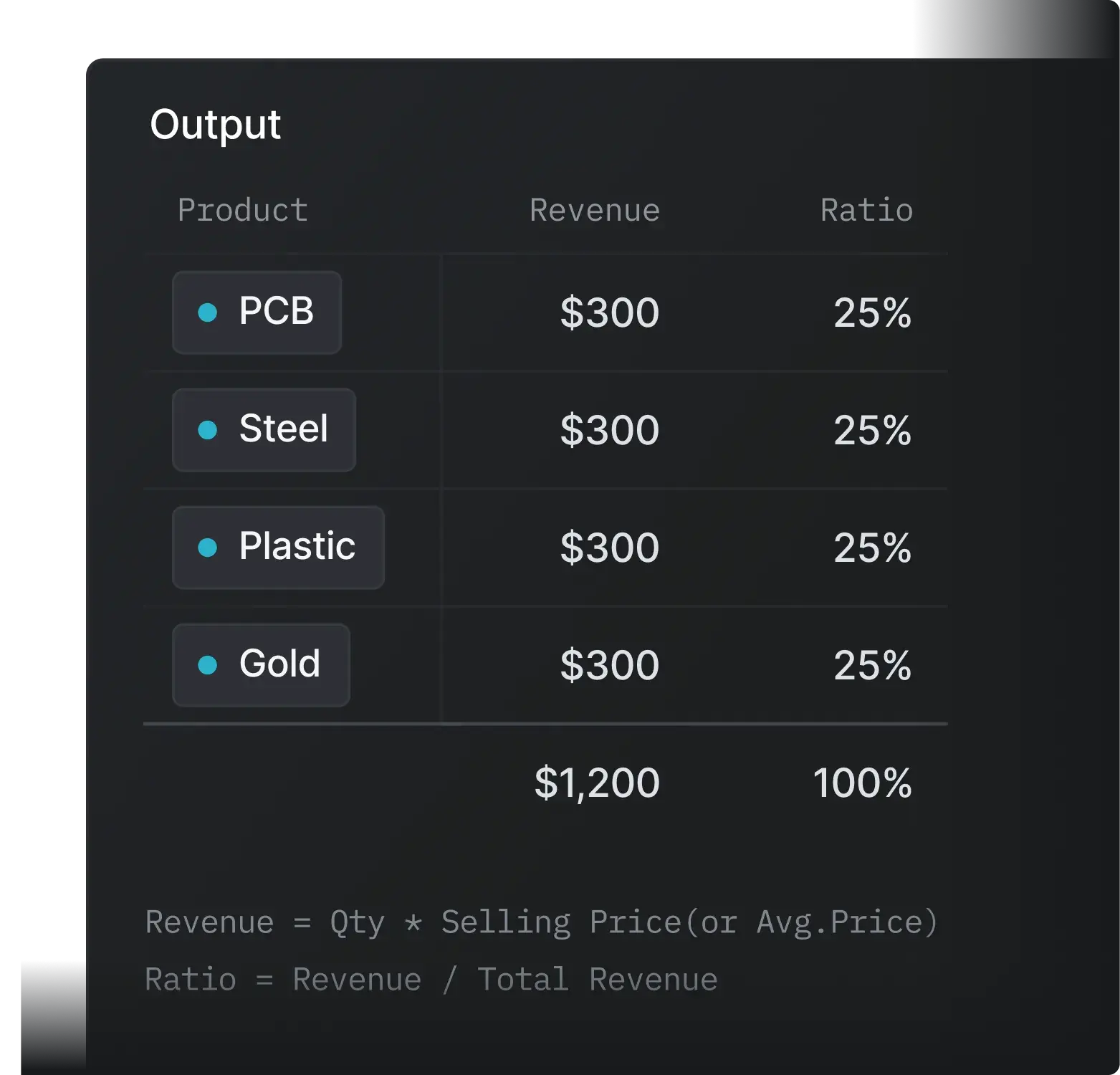
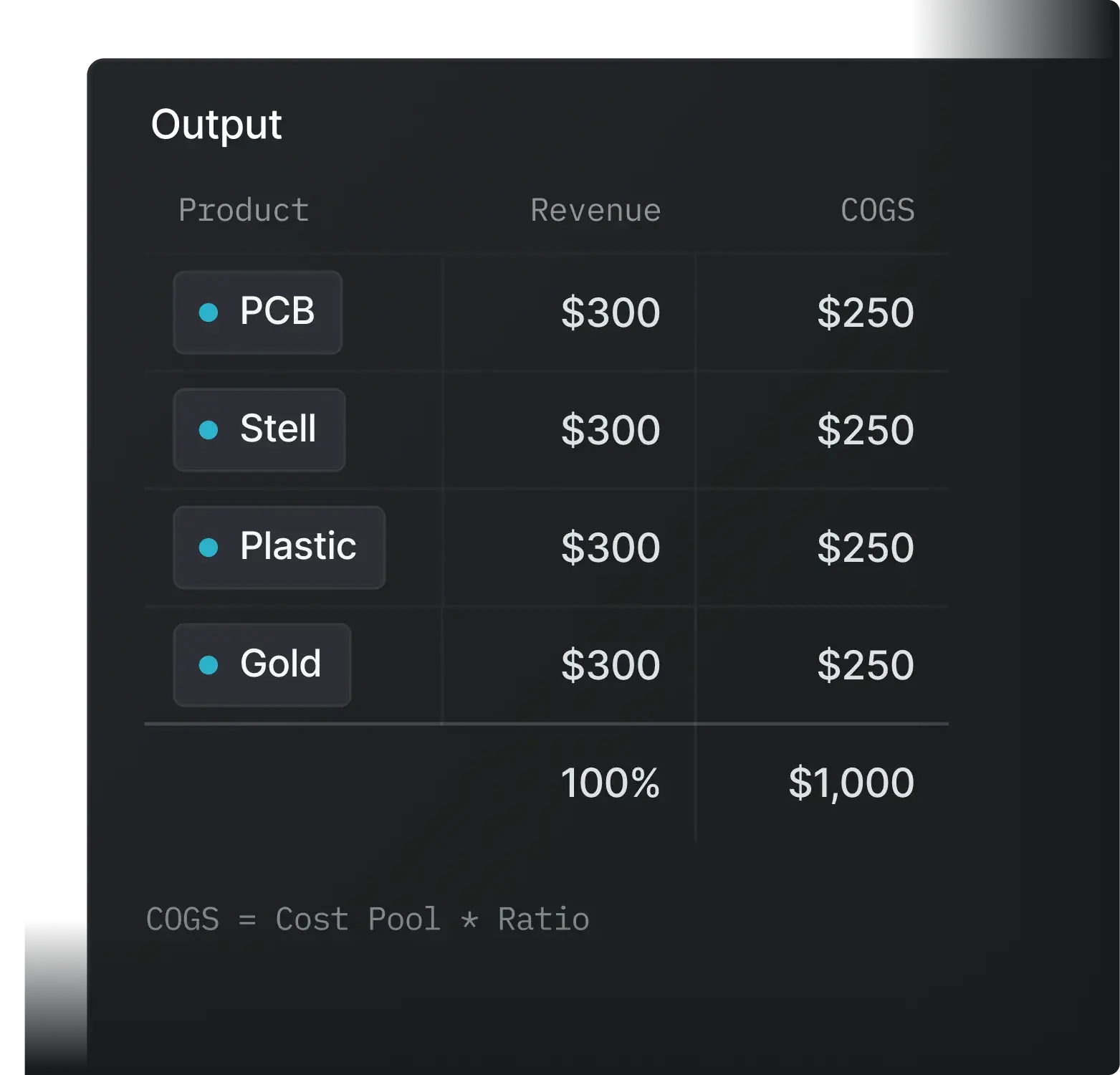
The core of our COGS calculation lies in the structure: Cost Pool → Ratio → Cost Allocation
Multi-Stage Cost Inheritance
When these LOTs move into the next processing stage, their COGS becomes the cost basis for the next cost pool.
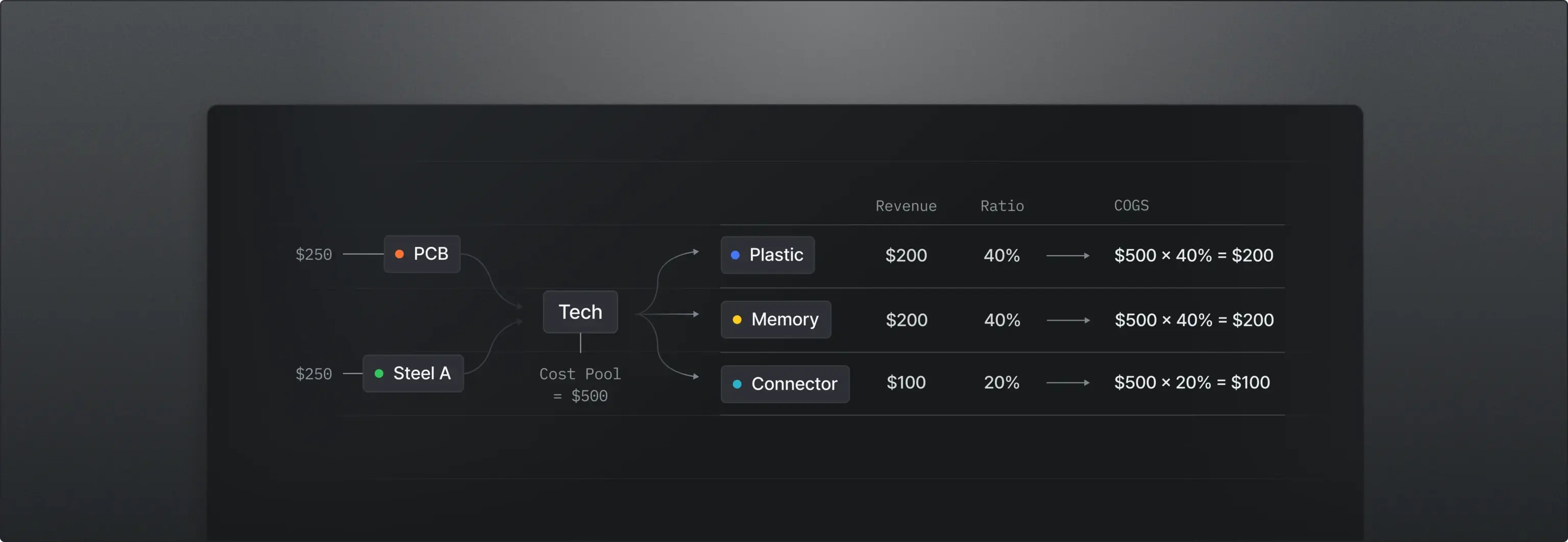
01. Cost Pool
02. Ratio
03. Cost Allocation
State-Based COGS tracking
COGS is automatically calculated based on the current state of each commodity. This ensures COGS is never left blank: